UC Davis project scientist Kristin Aquilino directs the Bodega Marine Laboratory's white abalone captive breeding program. In this video, she discusses the work she and her colleagues are doing to bring the endangered species back from the brink of extinction. This week marks the first time captive bred white abalone will be released to the ocean in hopes of saving the species.
A career dedicated to mollusks isn’t always easy. Sometimes progress can occur at a snail’s pace. But a team of scientists are close to reaching a significant milestone in their efforts to bring white abalone — a species of sea snail — back from the brink of extinction.
My job is to write about the wonders and challenges of our coast and oceans, but I’ll admit: Before this story, I had no idea what an abalone looked like...
The California coast once teemed with millions of white abalone. Overfishing, warming oceans and predators devastated the species. Almost all are gone. Now scientists are trying to save this mysterious sea snail.
Scientists are celebrating a population boom among endangered white abalone being raised at the UC Davis Bodega Marine Lab as they approach the day they can begin introducing captive-bred sea snails into their natural ocean habitat — perhaps later this year or next.
Millions of Eggs Bring Program 1 Step Closer to Saving Species
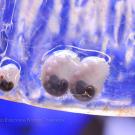
The Bodega Marine Laboratory’s white abalone program has millions of new additions following its most successful spawning ever at the University of California, Davis, facility. Three out of nine recently collected wild white abalone spawned last week, as did seven of 12 captive-bred white abalone. One wild female was particularly generous, producing 20.5 million eggs herself.
For the UC Davis College of Biological Sciences: A UC Davis alumna, Kristin Aquilino directs the Bodega Marine Laboratory's white abalone captive breeding program. In 2001, the marine snail was officially listed as endangered. Using captive breeding, Aquilino and colleagues hope to bring the species back from the brink of extinction.
UC Davis' very own Kristin Aquilino, a project scientist at Bodega Marine Laboratory, is in charge of the largest population of endangered white abalone that exists in the world. Her work focuses on a long-term goal is to build the population in captivity, then outplant them into the wild and hope to increase a stable population. However, is there even a chance for them to survive back in the wild with dramatic changes in ocean chemistry due to climate change?