What does it mean to learn marine science by doing? For students in the inaugural Fall Quarter at Bodega Marine Laboratory (BML), it meant using a clam gun to reveal burrowing invertebrates in the mudflats, tagging coho salmon to help monitor wild fish populations, and practicing the slow, stealthy skill of catching sculpin with bare hands.
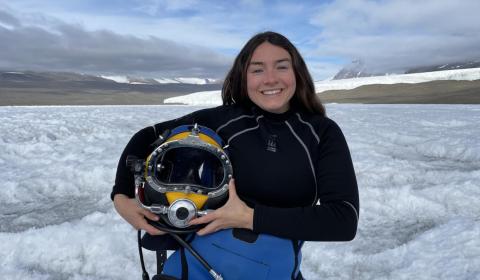
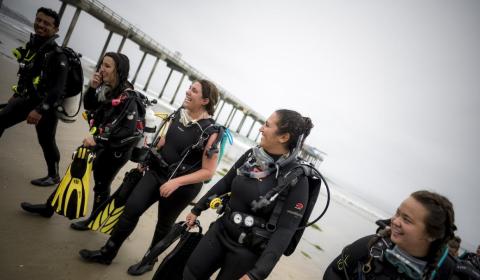
As an assistant diving and boating safety officer for UC Davis based at Bodega Marine Laboratory, Dias works with UC Davis researchers to coordinate and provide guidance for critical fieldwork that’s helping us understand the health of our oceans and waterways, and in turn, our global climate.
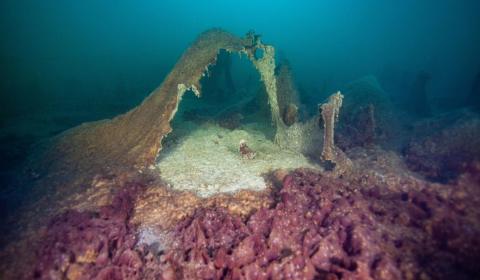
The McMurdo Dry Valleys don’t look like they belong in Antarctica. Largely devoid of snow, the landscape is mostly dirt and rock. When explorer Robert Falcon Scott trekked the area in 1903, he referred to it as “the valley of the dead.”
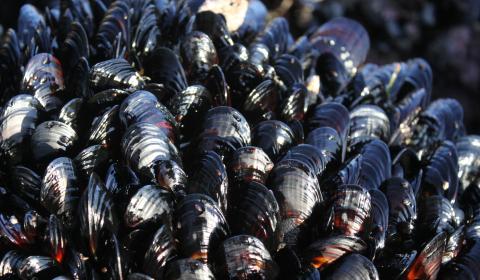
Just as the sun came up, Emily Longman held up a map of boulders that were laid out in front of her—a rocky outcrop off of Second Sled Road in Dillon Beach. To her surprise, the map was still largely accurate, nearly eight decades later.
Beneath the water, weightlessness envelops the body and sounds are amplified. The hiss of the regulator chimes like a metronome, mixing with the natural soundscape produced by ocean creatures and processes: the crunch from fish as they nibble on coral reefs and the crash of the waves above.
Tiny fragments of DNA permeate the air, soil, and water around us. This environmental DNA (eDNA) unlocks a non-invasive way to monitor biodiversity and detect species that might otherwise go unnoticed.