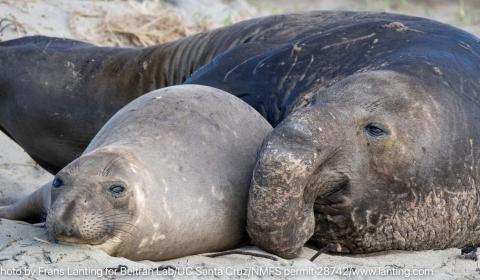
Seven weaned elephant seal pups in California’s Año Nuevo State Park tested positive for highly pathogenic avian influenza (HPAI) H5N1, the U.S. Department of Agriculture’s National Veterinary Services Laboratory confirmed Tuesday evening.
Their study systems are spread far and wide, from the inner delta to the coast and out into the open ocean, but their work is united in themes of change and community. Dr. John Durand, Dr. Hollis Jones, and Nicholas Trautman are all working to observe, understand, and apply science to a changing world.
Coral reefs make up less than 1% of ocean habitat but are home to at least 25% of marine species. These incredibly biodiverse ecosystems are increasingly threatened by human actions, including anthropogenic climate change.
When oceanographer Tessa Hill was asked to join the Climate Crisis Advisory Group (CCAG) as an advisor, she was surprised by the reason. The global group, formed in 2021 with the vision of acting as a bridge between the latest climate science and policymakers, was interested in Hill’s background expertise in methane, a potent greenhouse gas.
Fourth-year UC Davis geology student Sonia Somasundaram was studying in the Cadet Hand Library at the Bodega Marine Laboratory when a fellow student burst through the library’s doors.
For more than a decade, the SRJC–BML Internship Program has connected Santa Rosa Junior College students with hands-on research experiences at the UC Davis Bodega Marine Laboratory.