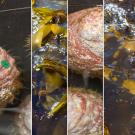
Seven weaned elephant seal pups in California’s Año Nuevo State Park tested positive for highly pathogenic avian influenza (HPAI) H5N1, the U.S. Department of Agriculture’s National Veterinary Services Laboratory confirmed Tuesday evening.
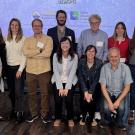
Their study systems are spread far and wide, from the inner delta to the coast and out into the open ocean, but their work is united in themes of change and community. Dr. John Durand, Dr. Hollis Jones, and Nicholas Trautman are all working to observe, understand, and apply science to a changing world.
Coral reefs make up less than 1% of ocean habitat but are home to at least 25% of marine species. These incredibly biodiverse ecosystems are increasingly threatened by human actions, including anthropogenic climate change.
When oceanographer Tessa Hill was asked to join the Climate Crisis Advisory Group (CCAG) as an advisor, she was surprised by the reason. The global group, formed in 2021 with the vision of acting as a bridge between the latest climate science and policymakers, was interested in Hill’s background expertise in methane, a potent greenhouse gas.
Along California’s coast, two ambitious efforts are reshaping how we approach restoration in a rapidly shifting world. The White Abalone Captive Breeding Program, led by Dr. Alyssa Frederick, and the Kelp RISES project, led by Dr. Marissa Baskett, working alongside a broad interdisciplinary team, are tackling ecological crises head-on.
When oil spills or pollutants enter the ocean, the visible damage is only part of the story. Dr. Andrew Whitehead studies the genetic ripple effects—how exposure reshapes the biology of fish and other marine life for generations. His federally funded research helps reveal what industrial pollution leaves behind in coastal ecosystems, and why cleanup isn’t the end of the process. It’s science that connects environmental justice, molecular biology, and long-term ecosystem health.
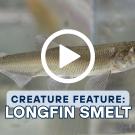
Join Karl Menard, Aquatic Resources Manager at the UC Davis Bodega Marine Laboratory, for a behind-the-scenes look at efforts to support longfin smelt in captivity.
Reflections on the "Microplastic Pollution: Impact on the SF Bay Delta and Remediation Strategies" symposium hosted by the Coastal Marine Sciences Institute (CMSI) and the Delta Stewardship Council (DSC).
What do you picture when you think of the California coast? Perhaps it’s the redwood-covered bluffs that plummet down to crashing waves, or the forests of kelp swaying along with the current. But the one thing that might not have come to mind has a surprising presence at UC Davis’ Bodega Marine Laboratory (BML): corals.
New research from the University of California, Davis, the Chinese Academy of Sciences and Texas A&M University reveals that massive emissions, or burps, of carbon dioxide from natural earth systems led to significant decreases in ocean oxygen concentrations some 300 million years ago.