A new study led by researchers at UC Santa Cruz, with coauthors from UC Berkeley, UCLA, UC Santa Barbara, and UC Davis, documents the collapse of kelp forest ecosystems off the coast of Northern California. Analyzing the contributing events, from warming oceans to the loss of sunflower sea stars, researchers used satellite imagery from over 30 years to assess historical changes and better understand the dynamics and resilience of kelp forests.
Using science to inform the restoration of California’s underwater forests
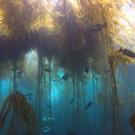
Kelp forests are underwater forests that support some of the world’s most productive fisheries and unique ecosystems. Kelp forests occur throughout the world. California’s kelp forests are particularly unique, as our “redwood forests of the sea” are among the tallest and most productive of the world: Northern California’s “bull kelp” grow an average of 4 in./day and can reach heights over 100 ft.
Climate change is a pressing issue that is and will continue to affect all life on earth. Throughout these past 10 weeks, I have had the rare opportunity to study the effects of ocean acidification on the calcification of different marine animals, specifically in environments that these animals will naturally face within the next century. Before this internship, I did not have much knowledge regarding this topic, but after working with my peers and mentors, I realized the importance of this work and have found this to be both an eye opening as well as an enriching experience.
Genetics, climate change, and conservation become highly intertwined in Dr. Andrew Whitehead’s lab. Although he works on a variety of research endeavors, he mainly focuses on how wild species respond to human-induced stress, such as the effects of climate change, and how that may affect an individual organism’s progeny. Essentially, Dr. Whitehead attempts to monitor how climate change and pollution will shape the genetic makeup of multiple generations.
The first seminar in CMSI's new Climate Justice Seminar Series will be on November 30th at 1 pm and will feature speaker Dr. Ayana Elizabeth Johnson in a moderated discussion with Ph.D. Candidate Carina Fish.
Oceans have always done us a favor, absorbing carbon dioxide in the atmosphere. But now rising greenhouse gases are warming the ocean and changing its chemistry. All of this is putting marine species and ecosystems at risk, threatening food security and the livelihoods of people along its shores. In this episode of Unfold, we’ll take a deep dive into the ocean to examine the effects of climate change.
Red abalone mothers from California’s North Coast give their offspring an energy boost when they’re born that helps them better withstand ocean acidification compared to their captive, farmed counterparts, according to a study from the Bodega Marine Laboratory at the University of California, Davis.
Dense canopies of kelp are a well-known and much-loved feature of California’s coastal waters. Kelp forests create subtidal havens for marine life like red and white abalone, urchins, sea stars, and rockfish.