


The Sharks of San Francisco Bay
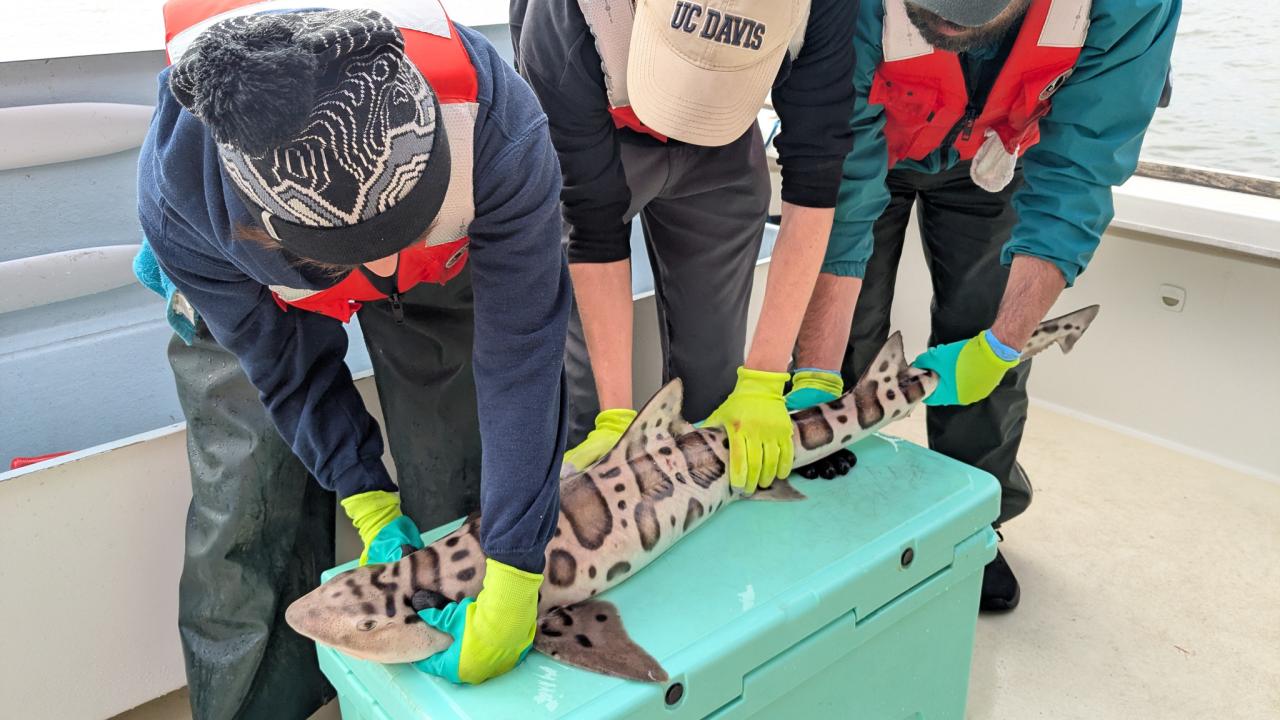
There are sharks in San Francisco Bay. More of them than you might think.
Bat rays cruise in muddy shallows. Smoothhounds slip along sandy shores. Sevengill sharks patrol deeper waters. And tucked into the wetlands and inlets of the Bay, young sharks and rays find sheltered places to feed, grow, and avoid predators.
For years, scientists have documented these animals in different corners of the Bay, sometimes while investigating entirely different questions and species. Piece by piece, their observations helped reveal that San Francisco Bay isn’t just a place where sharks and rays happen to be: it’s an important part of their life cycle.
Earlier this year, the International Union for Conservation of Nature (IUCN) designated San Francisco Bay as an Important Shark and Ray Area (ISRA), placing it among more than 750 areas around the world recognized for their importance to sharks, rays and skates. The designation is not a regulatory protection, but it puts the Bay on a global map and highlights the years of research that helped get it there.
Contributing data to the assessment were two University of California, Davis researchers working in very different parts of the Bay and studying these animals from very different perspectives.
It's not enough to find a baby shark
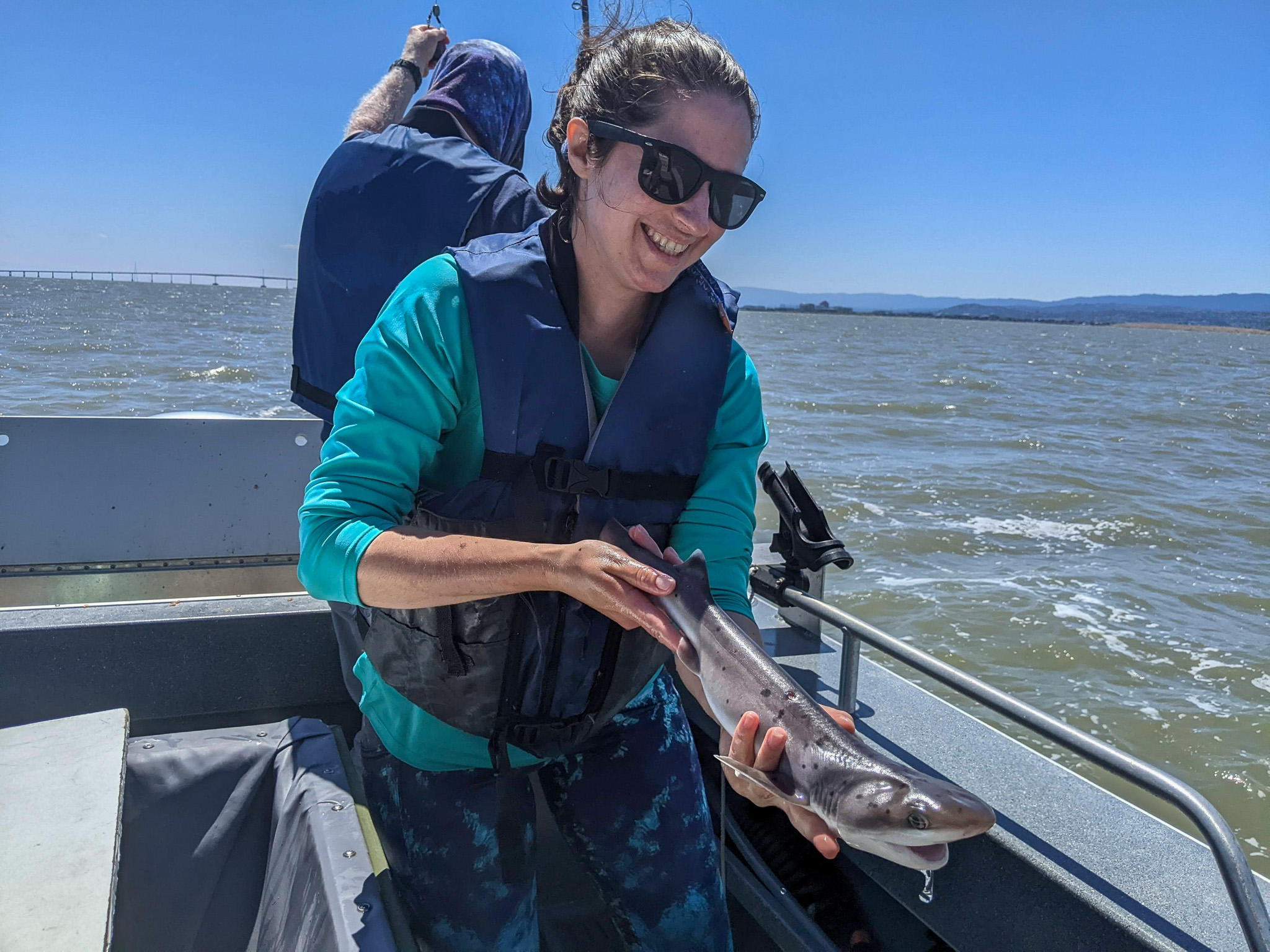
A designation like this doesn’t come from simply seeing a shark in a habitat. Researchers have to build long-term evidence that animals are consistently using a habitat for an important part of their life cycle. As Dr. Meghan Holst, a Researcher at UC Davis, puts it, “It’s not a one-off. It’s not that we just found pups one time: we’re finding pups consistently, year after year, in the same locations.”
Capturing that data is often neither cheap nor easy. Acoustic tracking, which uses small sound emitters placed inside elasmobranchs and underwater listening stations to track their movements, is a powerful tool for this kind of work, but it’s also prohibitively expensive. To help close that gap, Holst and her team have used other methods, including stable isotope analysis, to examine whether the chemical signatures of elasmobranchs found in the Bay reflect the Bay’s environment. This can help researchers understand whether an animal has spent a significant amount of time in the Bay.
The scientists can demonstrate that San Francisco Bay is a productive and important habitat. What they can’t yet say is how it compares with other potential reproductive habitats along the California coast, many of which haven’t been studied with the same intensity.
A Bay built for baby sharks
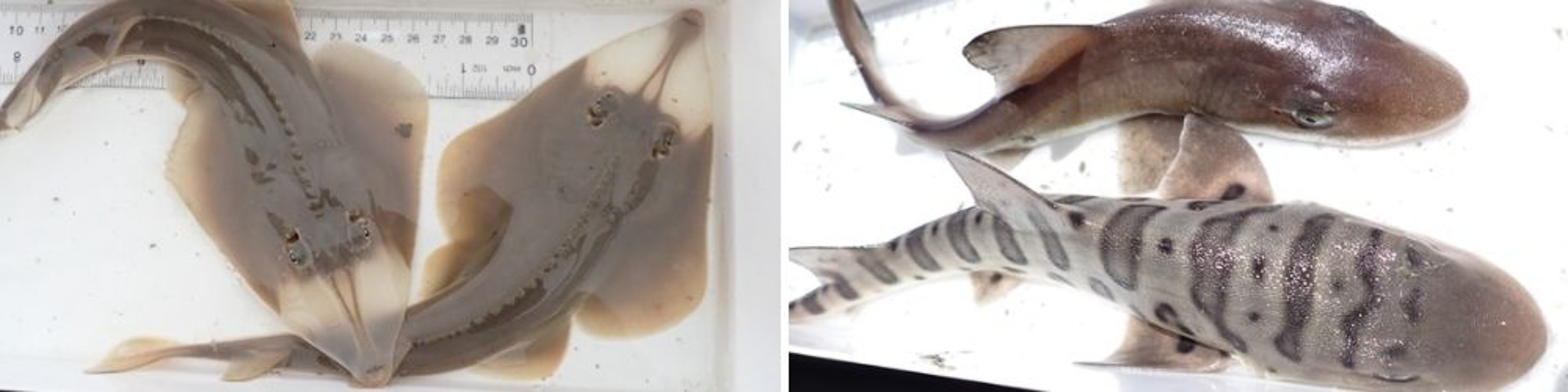
San Francisco Bay isn’t just somewhere sharks happen to be. Its diversity of depths and bottom habitats creates different niches for different species, from muddy areas favored by bat rays to sandy areas used by smoothhounds and rocky areas that suit other species. Shallow, protected areas can also give young animals refuge from larger predators, including adult sharks of the same species. And the Bay's location allows it to receive nutrients from both the watershed and coastal upwelling, supporting a productive food web that can sustain growing predators.
Help Track a Shark
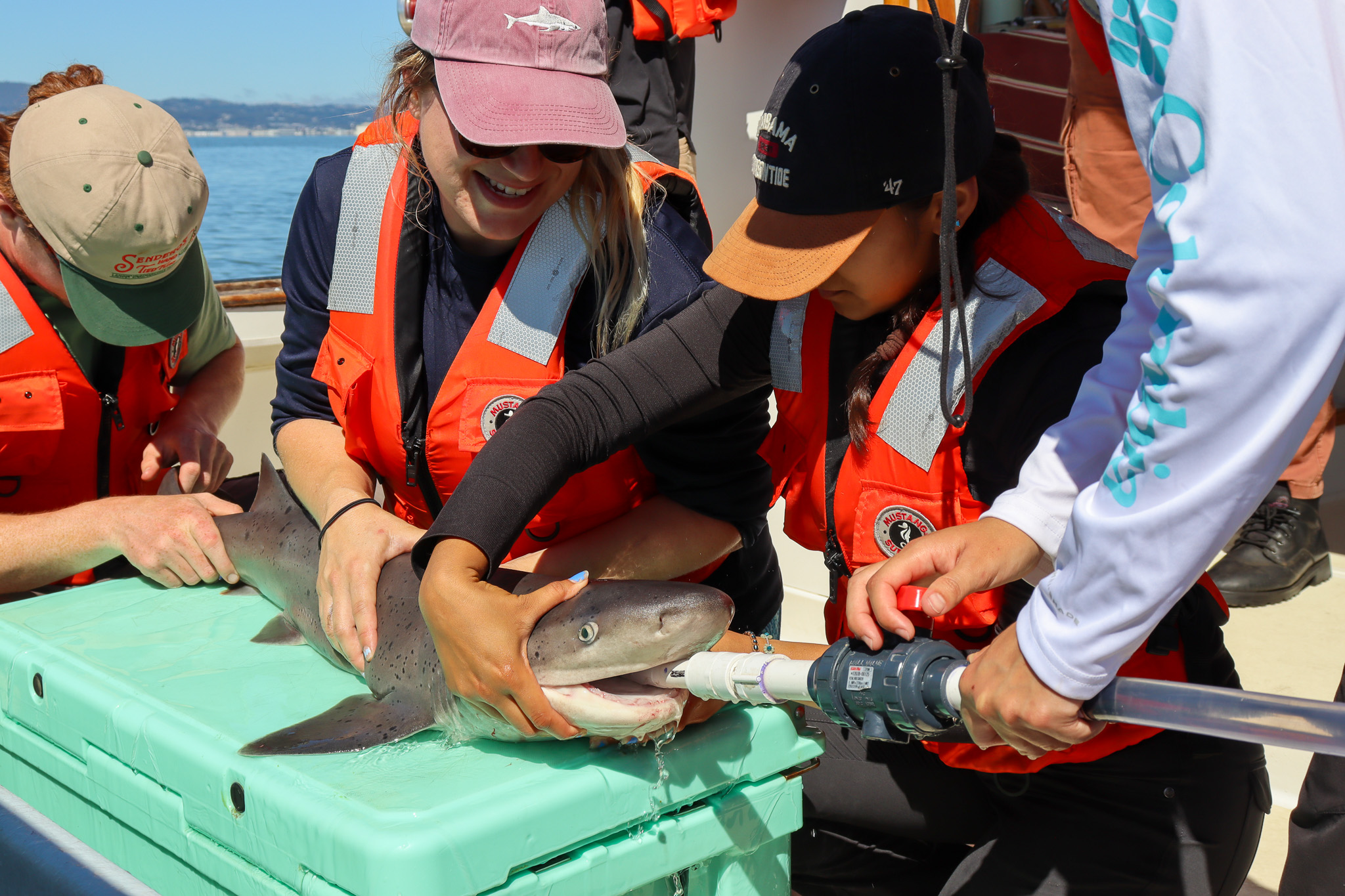
A nonprofit organization founded by Holst, Ocean Science Expedition Academy (OSEA), developed a community science program that teaches people how to document sevengill sharks along the West Coast. The goal is to determine whether individual juvenile sevengills can be recognized by their spot patterns as they grow. Photographs submitted by people along the coast could help researchers track individual sharks and better understand where they go as they mature.
Two research programs, one bigger picture
Sharks and other elasmobranchs use San Francisco Bay from its shallowest wetlands to its deepest waters, with different species and life stages occupying different parts of the ecosystem. Harder to find, though, is a research program that can study them in all these places and across all these stages. That's where two very different research programs at UC Davis begin to fill in the gaps.

Holst focuses on deeper waters, tracking elasmobranchs and assessing their health and physiology. Dr. Levi Lewis, a Research Scientist and Director of the Otolith Geochemistry and Fish Ecology Laboratory (OGFL) at UC Davis, takes a different approach. He and his co-PI, Dr. Jim Hobbs, conduct fisheries-oriented monitoring, with support from the Wetlands Regional Monitoring Program, in shallow, inland wetlands. Both research programs encounter young sharks and rays, but the species and numbers they see can differ. Holst, for example, encounters many sevengill shark pups, while Lewis’s work contributes observations on other species from shallow wetland habitats. Though sharks and rays aren't necessarily the target of Lewis and Hobb’s research, those encounters become part of the record.
“Collaborating” is simultaneously the wrong word and the right word for what they’re doing. As Lewis puts it: "We really aren't collaborating at all, but we're both monitoring habitats that have not been monitored." Their research programs developed independently, but when the IUCN began assessing San Francisco Bay as an Important Shark and Ray Area, those separate datasets could be brought together to reveal a more complete picture of how elasmobranchs use the Bay. The observations from Lewis's work complemented Holst's targeted research, helping show that the Bay supports these animals across multiple habitats and stages of life.
The People Behind the Fieldwork
Field research on the water requires a special kind of support. The UC Davis Boating Safety Program, housed at Bodega Marine Laboratory, helps turn scientific questions and planned experiments into safe, workable field operations.
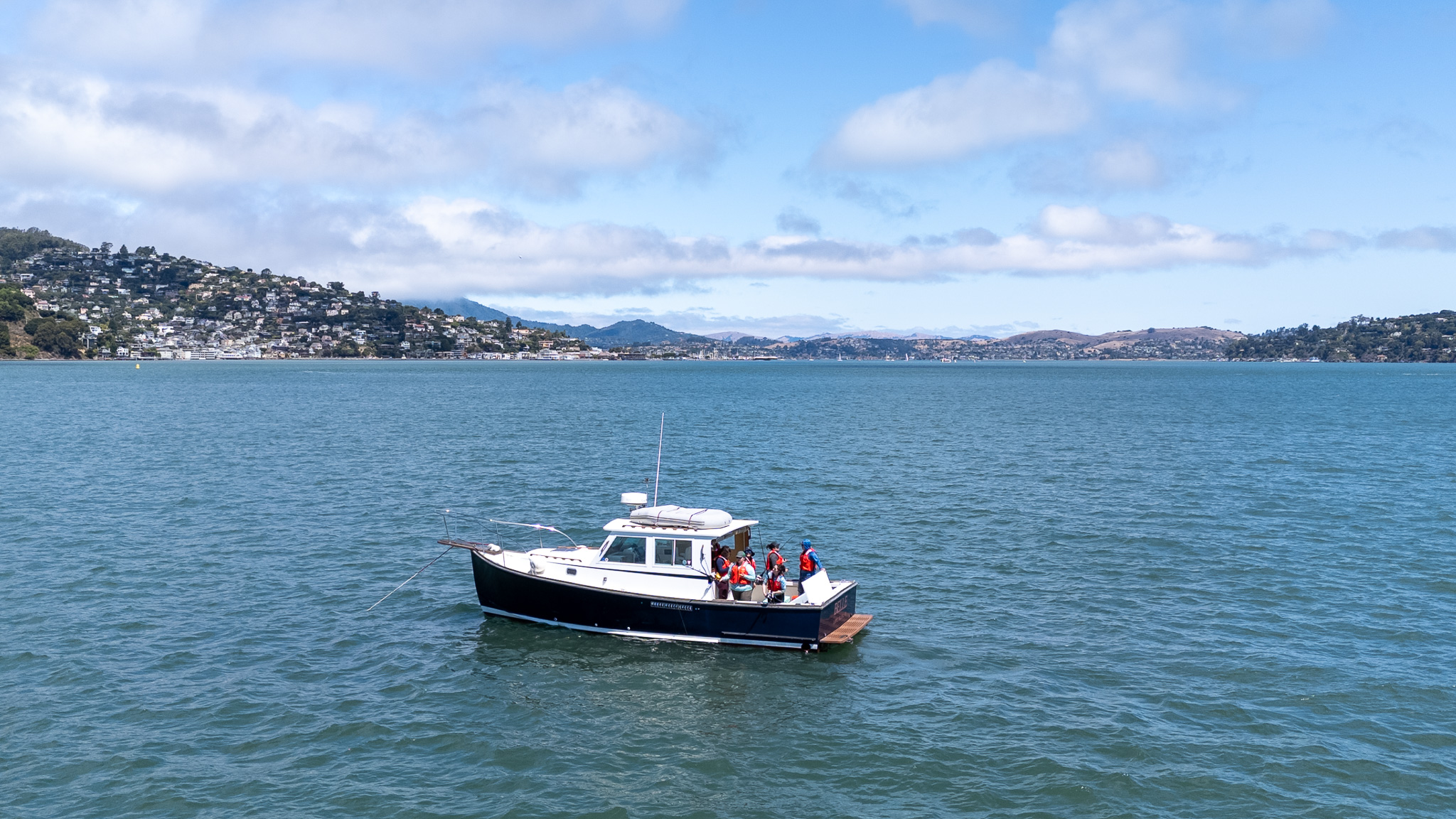
James Fitzgerald, Boating Safety Officer at UC Davis, and his team conduct operator and crew training courses, vessel and equipment safety inspections, field safety and mission planning sessions, boat fabrication designs and onboard operating systems and technology upgrades. But he sums up their approach simply: “We want people to be safe, legal and effective.” Sometimes that means helping connect a researcher like Holst with equipment — Fitzgerald helped facilitate the connection with a supporter who donated a research vessel to her work. Sometimes it means providing extensive training to researchers and volunteers, and sometimes it means being just a phone call away when a scientist finds themselves in rough seas, either literally or figuratively.
Fitzgerald spent 13 years in the Coast Guard and has witnessed many tragedies at sea. That experience, along with the 2000 UC Davis boating accident that claimed the lives of five people, motivates him to help researchers conduct their work safely. But what keeps him going is also seeing what happens when that support works: “When I see them in the headlines … it brings me great joy to know that they’re thriving, they’re doing good work, and I had a little part in that.”
Learn more about the UC Davis Boating Safety Program
The questions keep growing
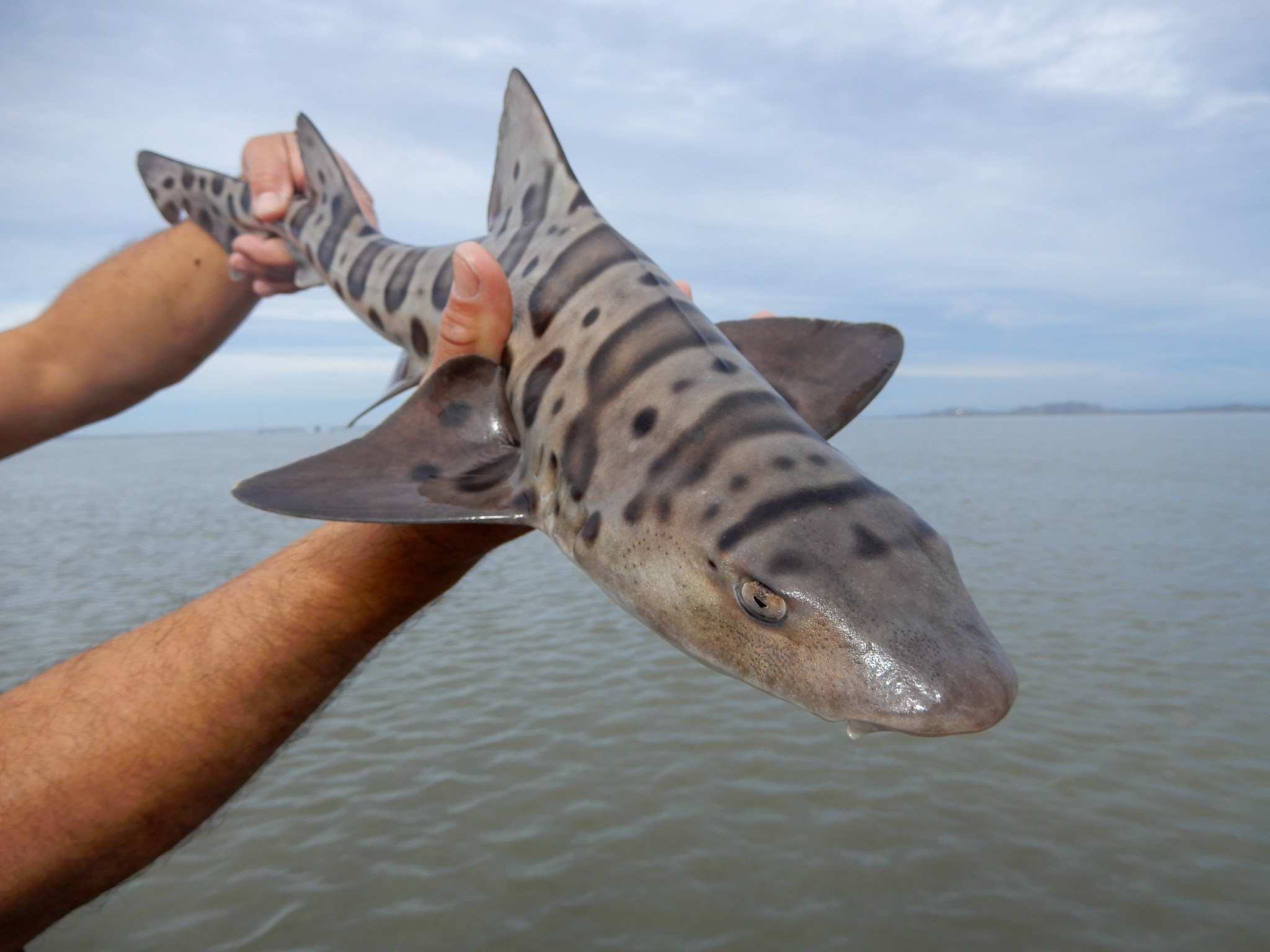
The designation doesn't answer every question about San Francisco Bay. Holst's team can't say the Bay is more important as a reproductive habitat than every other area along the California coast because comparable data don't exist for the entire coastline. What they can show is that sharks and rays are consistently using the Bay as reproductive habitat, information that can help researchers better understand what makes the Bay important, what threatens it and how that might change over time.
Recognition is not the end of the research. In many ways, it's the beginning. Holst's lab is continuing to build baseline data about contaminants, movement, abundance and the overall health of juvenile and adult elasmobranchs, while comparing those findings with historical datasets and partnering with researchers and organizations whose long-term work can help fill in the gaps. San Francisco Bay may now be on the global map of Important Shark and Ray Areas, but there is still plenty to learn about what that designation means on the water. As Lewis puts it: “We’re acting locally, and we’re having a global impact.”