

Aestival Afternoons at BML: Abalone, Dulse, and Discovery
An SRJC-BML Internship Story
Hello, my name is Savannah Auble, and this summer I had the opportunity to complete an internship at the UC Davis Bodega Marine Laboratory through my school, Santa Rosa Junior College. I am currently a third-year biology student at SRJC, and I plan on transferring to UC Davis in Fall 2027. I am particularly interested in medicine and neurobiology, and hope to one day pursue a career as a physician’s assistant.
While some individuals may view medicine and marine biology as two vastly different fields of study, my initial interest in the SRJC-BML internship stemmed from my desire to broaden my understanding of biology as a whole. I have only studied a slight portion of the information that it encompasses, and I believe it is integral to my studies as a biology student to broaden my knowledge and experience in other components of the field, such as coastal ecology and conservation, before committing to a specific area of study.
As an intern at BML this summer, I had the pleasure of being mentored by Dr. Sara Boles from Dr. Jackson Gross’ Aquaculture Cooperative Extension Lab. This was my first internship and formal scientific research experience, which made this opportunity very informative as I became acquainted with the laboratory setting. Dr. Boles’ work focuses on endangered black abalone (Haliotis cracherodii), using cultured red abalone (H. rufescens) as a proxy. Most recently, she has developed the use of ultrasonography as a non-invasive technique to evaluate gonadal reproductive condition and determine sex for improving spawning success.
The research questions that we began to explore this summer included two separate but intersecting projects:
- How can we manipulate abalone diets with differing nutrient levels to increase the reproductive capacity of cultured red abalone? (Funded by the U.S. Navy)
- How can seaweed be grown more energy efficiently as a domestic commodity crop? (Funded by the USDA)
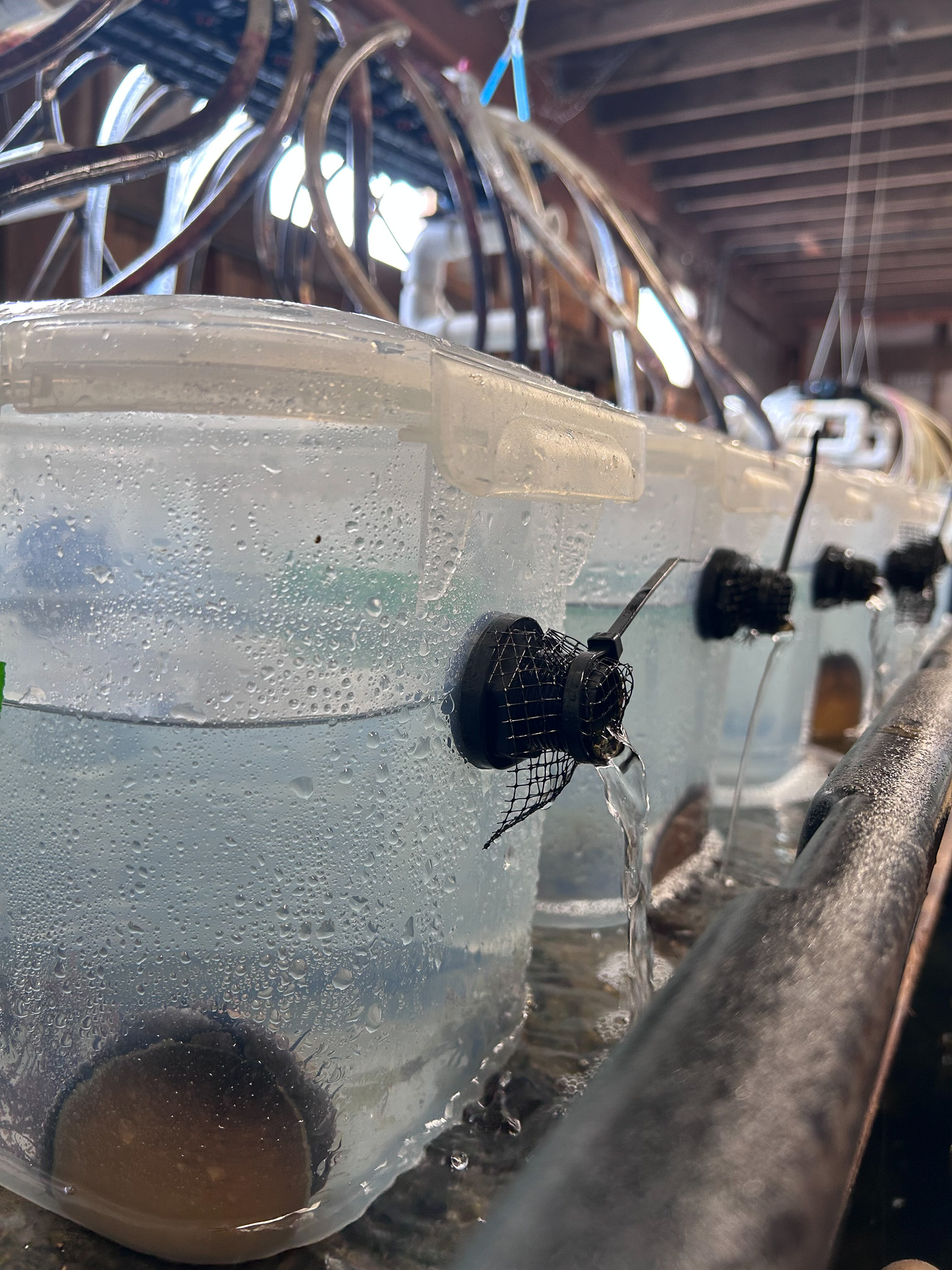
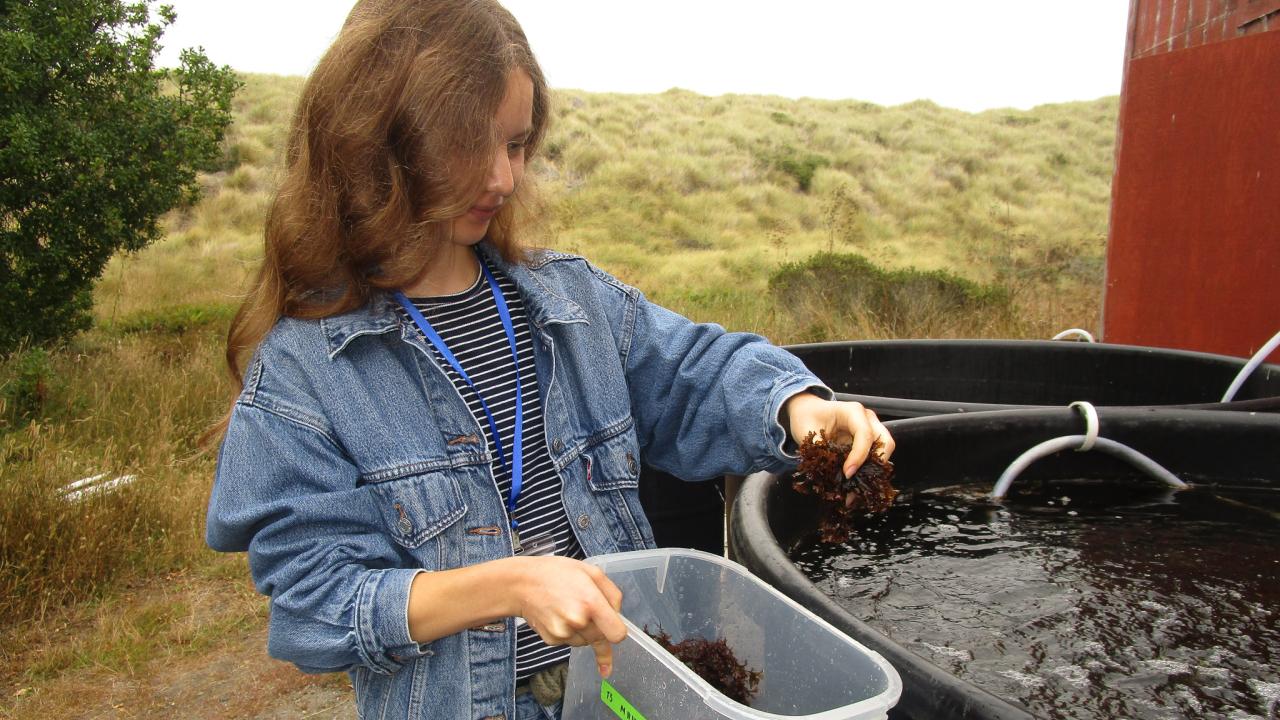
Throughout my internship, I primarily aided in gathering equipment and preparing the lab space for incoming dulse and abalone. This included scrubbing large outdoor tanks to remove diatom build-up for the dulse, as well as cleaning, sorting, and labeling plastic containers for abalone transportation and experimentation. I also handled the abalone themselves, weighing each individual, documenting gender and gonad score, and assisting in feeding.
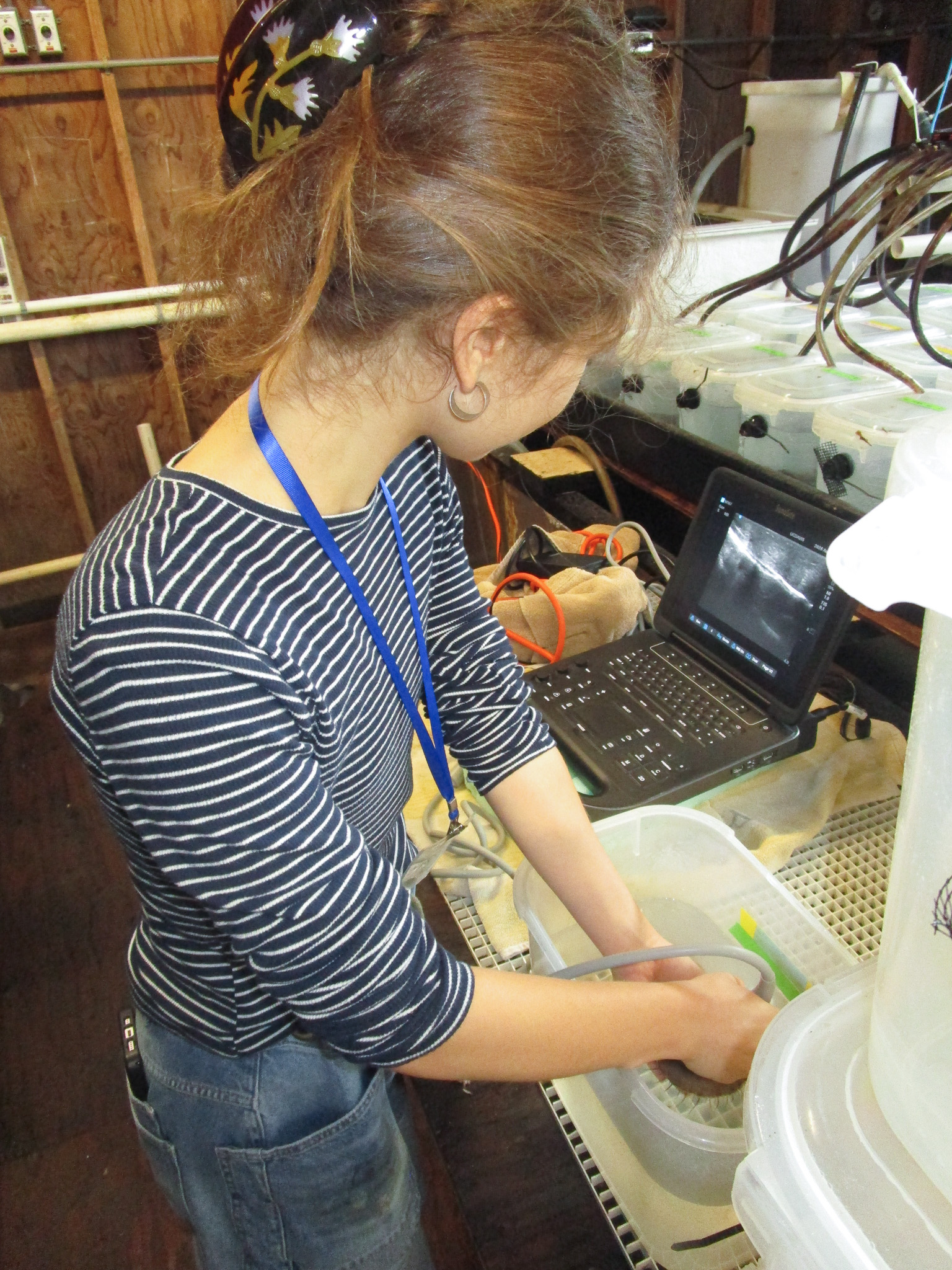
My favorite aspect of my experience at BML with Dr. Boles was being able to use ultrasound imaging technology on the abalone to view their gonads and heart contractions. In the preceding weeks, I had conducted qualitative analysis with my fellow mentee on a set of abalone videos that displayed their hearts contracting, so it was thoroughly exciting to see these processes for myself.
Although the timing of my internship only allowed me to be a part of the preparation stage of Dr. Boles’ experiment gave me valuable insight into what it is like to work in a professional lab and delve into the enriching world of research. I feel that I have gained experience and a newfound confidence in the marine branch of biology, benefiting both my future academic endeavours and personal curiosity.
I am honored to have worked with Dr. Sara Boles and grateful to have been a part of the BML community’s wonderful team of scientists!
About the Program:
The SRJC-BML Internship Program provides summer research opportunities for Santa Rosa Junior College students at the Bodega Marine Laboratory.