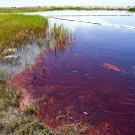
When oil spills or pollutants enter the ocean, the visible damage is only part of the story. Dr. Andrew Whitehead studies the genetic ripple effects—how exposure reshapes the biology of fish and other marine life for generations. His federally funded research helps reveal what industrial pollution leaves behind in coastal ecosystems, and why cleanup isn’t the end of the process. It’s science that connects environmental justice, molecular biology, and long-term ecosystem health.
The effects of endocrine disruptors on the reproductive biology of resident fish in the Sacramento-San Joaquin Delta have been studied at BML. Endocrine disruption in the inland silverside (Menidia spp.) has been the focus for a number or years since populations of native fish are so low and several are listed as endangered, Menidia is an ideal indicator species as they have a limited home range, are found across broad salinity gradients, and are reproductive for about 4-6 months.