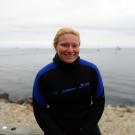
The flashlight illuminates tens of thousands of swirling, floating specks, each no bigger than a breadcrumb. Raising my voice to be heard over the low roar of machinery in the wet lab, I ask Dr.
Seagrasses Turn Back the Clock on Ocean AcidificationExpansive Study Shows Seagrass Meadows Can Buffer Ocean Acidification
Spanning six years and seven seagrass meadows along the California coast, a paper published today from the University of California, Davis, is the most extensive study yet of how seagrasses can buffer ocean acidification.
For most of my high school and early college experience, marine biology was something that greatly sparked my interest. I went into college pursuing a major in marine biology. However, over time I found a passion for chemistry and molecular biology, which later drove me to change my major to cell and molecular biology. Though I made this change, my admiration for marine science remains.
Climate change is a pressing issue that is and will continue to affect all life on earth. Throughout these past 10 weeks, I have had the rare opportunity to study the effects of ocean acidification on the calcification of different marine animals, specifically in environments that these animals will naturally face within the next century. Before this internship, I did not have much knowledge regarding this topic, but after working with my peers and mentors, I realized the importance of this work and have found this to be both an eye opening as well as an enriching experience.
Oceans have always done us a favor, absorbing carbon dioxide in the atmosphere. But now rising greenhouse gases are warming the ocean and changing its chemistry. All of this is putting marine species and ecosystems at risk, threatening food security and the livelihoods of people along its shores. In this episode of Unfold, we’ll take a deep dive into the ocean to examine the effects of climate change.
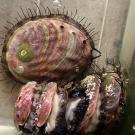
Red abalone mothers from California’s North Coast give their offspring an energy boost when they’re born that helps them better withstand ocean acidification compared to their captive, farmed counterparts, according to a study from the Bodega Marine Laboratory at the University of California, Davis.
In a Changing Ocean, Giant Kelp’s Reproductive Success Depends on Where It’s From
When a marine heat wave hit California’s coast in 2014, it brought ocean temperatures that were high for Northern California but fairly normal for a Southern California summer. Much of the giant kelp in the north died in the heat wave, while southern populations survived.