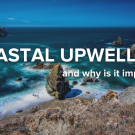
While they cover less than 1% of the ocean’s surface, the world’s four major upwelling zones are biological powerhouses. Located along the coasts of California, Chile, Portugal, and South Africa, these Eastern Boundary Upwelling Systems (EBUS) drive cold, nutrient-rich water to the surface, supporting massive populations of fish, birds, and mammals.
The peculiarities of how coastal currents change close to the shore is a surprisingly recent field of research and one in which several Bodega Marine Laboratory researchers are active, using approaches that include mathematics and field-observations. The study of internal waves dissipating nearshore, the slowing of currents in the coastal boundary layer, the breaking of waves on the shore, and the retention of waters in small coves and bays is understood within a broader view of nearshore ecology and environmental issues.
Scientists at BML are engaged in researching many other aspects of climate change, which can be grouped broadly into oceanographic and ecological studies as well as in the context of habitat restoration and invasive species.